Every major AI model you use today — ChatGPT, Gemini, Claude — runs on infrastructure controlled by a handful of corporations. Your prompts travel to their data centres, get processed on their machines, and the results come back to you. You pay for the service. They keep the infrastructure, the data insights, and all of the margin. The cost of centralised AI inference is rising — enterprises routinely spend six- and seven-figure sums annually on cloud compute from AWS, Azure, and GCP, with no ownership of the underlying hardware and no guarantee that sensitive data isn't being logged, analysed, or exposed through vendor vulnerabilities.
PAI3 (People's AI) inverts that arrangement entirely. It is a decentralised AI infrastructure network — a system where individual participants buy, operate, and earn from AI compute hardware rather than renting access from a centralised provider. You own a physical machine. AI models run on it. When the network routes inference tasks (the actual computation that produces an AI output) to your node, you earn tokens. Sensitive data stays within the physical environment where the node operates. Token holders also participate in protocol governance through on-chain voting.
As of March 2026, the PAI3 Foundation and its associated DUNA (a decentralised unincorporated nonprofit association — a legal structure that gives the network a recognised entity without centralised corporate control) are established. Over 500 Power Nodes have been sold, with an undisclosed number actively connected to testnet. PAI3 claims more than 40 enterprise partners at various stages of engagement — from memoranda of understanding to active pilots — though the depth and binding nature of these partnerships has not been independently verified. The testnet has been live since Q3 2025.
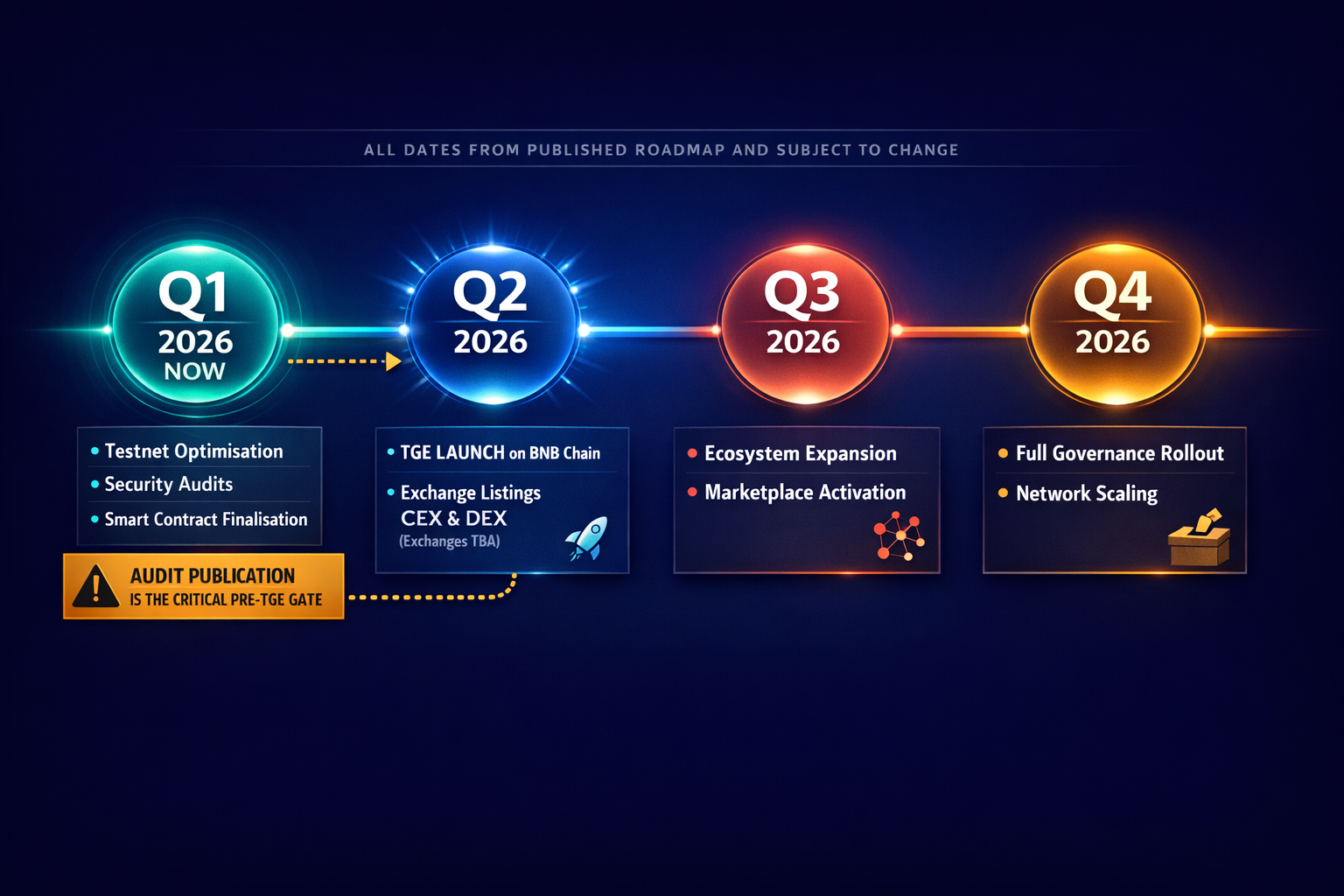
What has not happened yet: the $PAI3 token does not exist on-chain. No TGE has occurred, no trading is possible, and no market price exists. According to PAI3's published roadmap, the $PAI3 token generation event (TGE — the moment the token is created and distributed for the first time) is targeted for Q2 2026, with an exact date still to be announced. The mainnet, branded internally as the "World Computer," targets Q3 2026. Right now, in Q1 2026, the project is in its final phase of testnet optimisation, security audits, and smart contract finalisation.
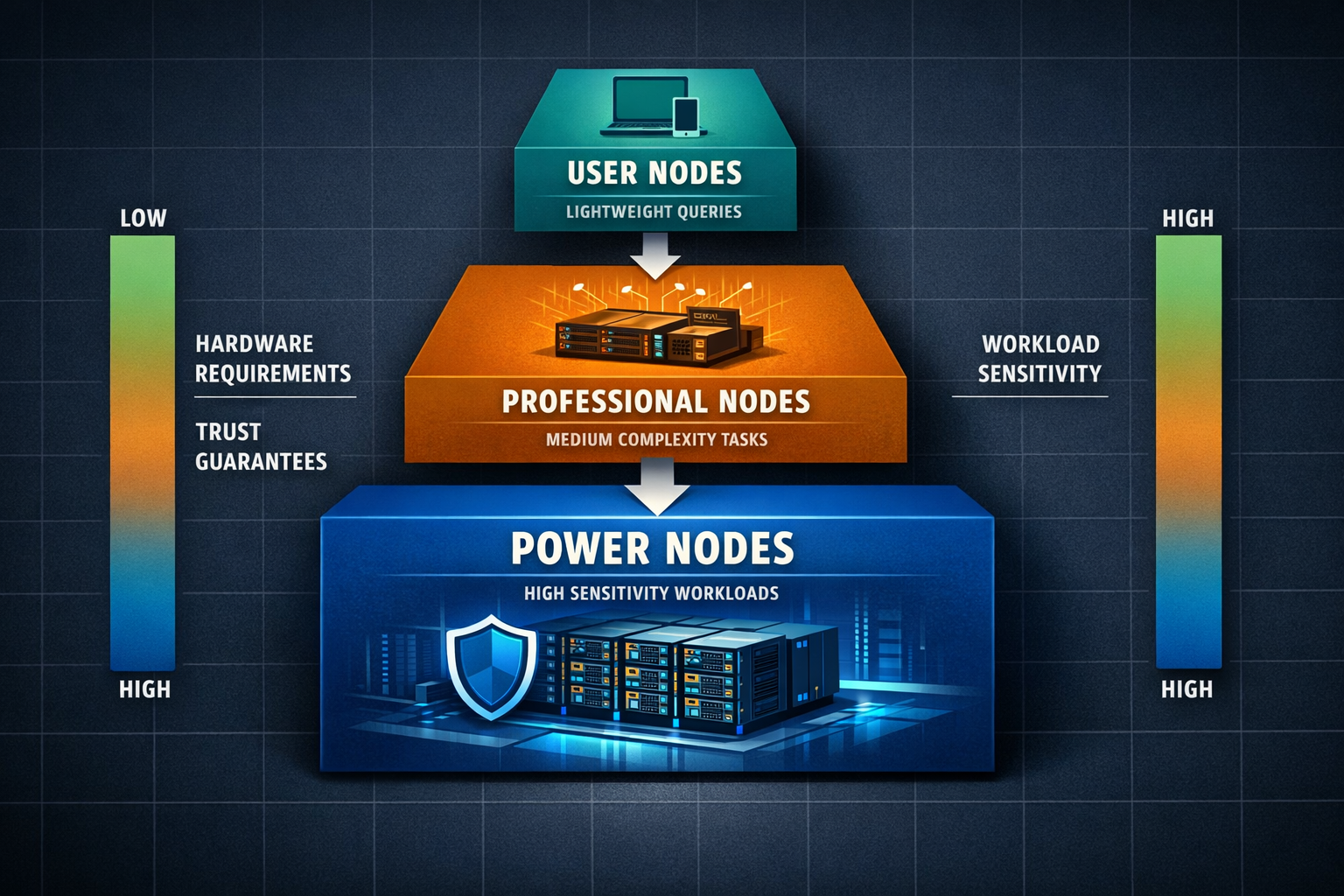
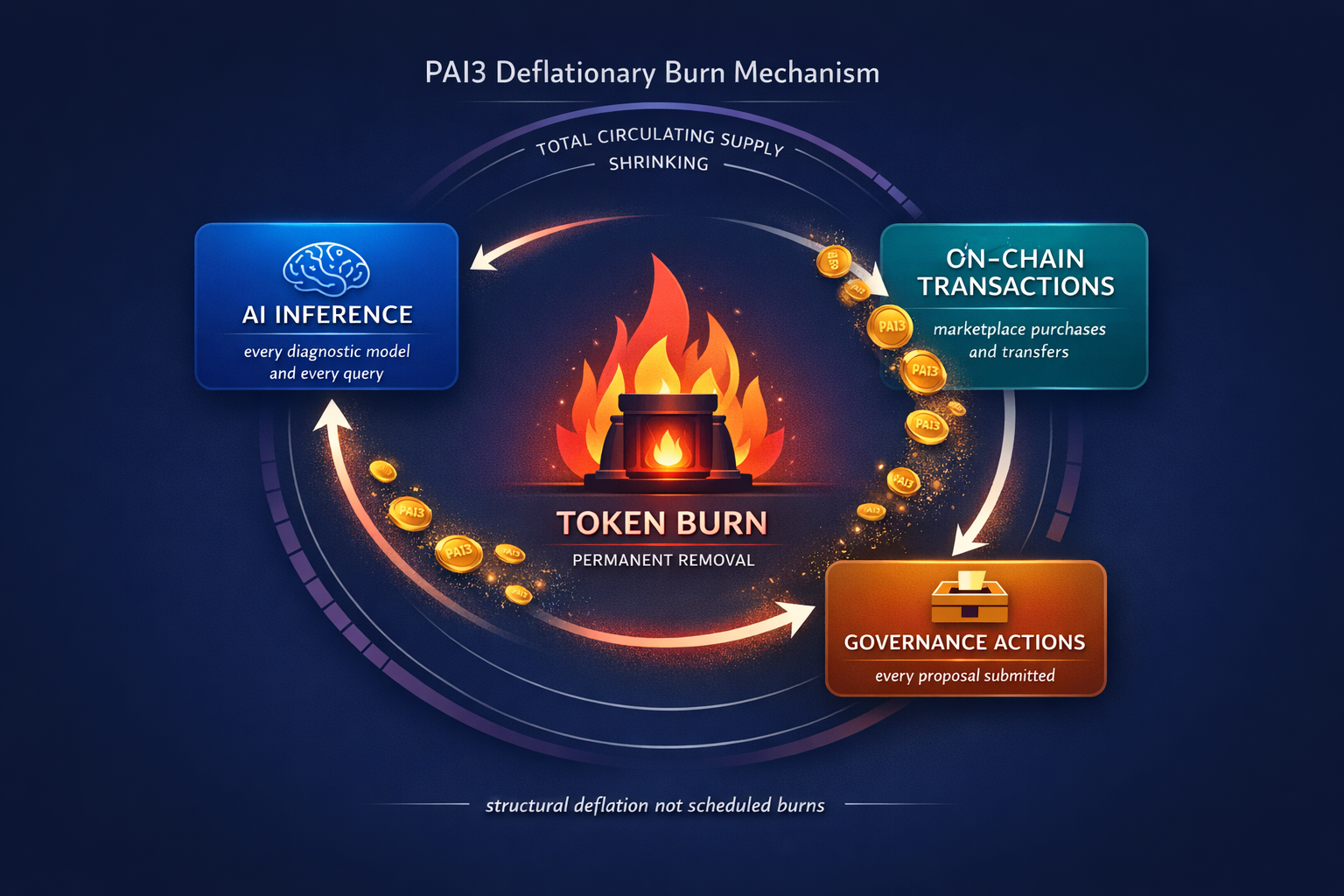
This article covers three things: how the node system works and which type fits your situation, how the token and its deflationary economics function, and exactly what you need to do before the Q2 2026 TGE to be positioned correctly. By the end, you will have a working understanding of PAI3's node economics, token mechanics, and pre-TGE preparation steps — information that is not consolidated anywhere in the project's own documentation.